
How to choose books for children and teens and build a reading habit
A guide for families, teachers and school libraries on choosing books at different reading stages, sharing stories aloud and making room for reading by choice.
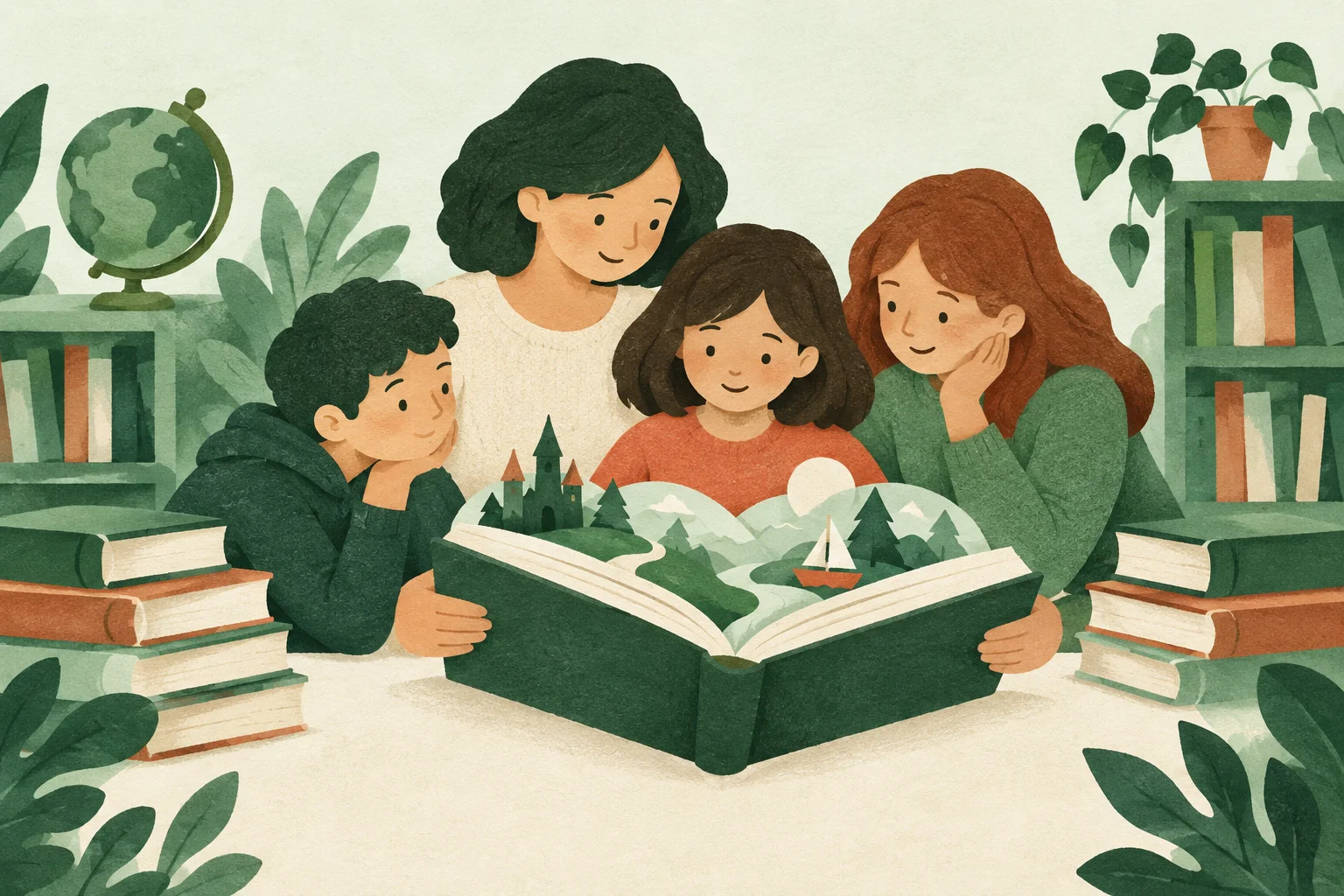
A book can appeal because of its subject, what its pictures reveal, or the sound of someone reading it aloud. Before checking the age on the cover, ask what interests the reader and how they would like to explore the book. At home, in class or in the library, make time to try things out and choose. That gives reading a place of its own.
What to offer at each reading stage
These stages are approximate. A reader may be independent on a familiar subject and want company with another text. They may also read with different levels of ease in different languages.
- Pre-readers. Try picture books that invite children to point and comment, wordless books, rhymes and refrains. Let children turn pages, return to a scene or join in with a gesture. Rereading a familiar book gives them a chance to anticipate what comes next and spot new details.
- Beginning readers. For reading alone, offer short texts with clear print, manageable sentences and a story or subject they care about. Take turns reading pages or read the denser passages yourself. Keep reading aloud from books that would still be difficult for them to tackle independently.
- Independent readers. Make room for series, short chapters, comics, poems and reference books. Offer two different books on a new subject they want to explore. Fluency gives readers the freedom to alternate between a challenge and something familiar.
- Teenagers. Invite them to choose by interest, by a question they have, or through peer recommendations. Offer texts that respect their maturity at a range of lengths and levels of difficulty. An extract, a graphic novel or an optional book club can start a conversation without requiring anyone to speak in front of a group.
Five things to look for in a book
- Text. Read a page aloud. Listen to its rhythm and notice how word choice helps a reader picture a scene, follow an action or grasp an idea. For independent reading, see whether the effort of decoding each sentence leaves room to understand it.
- Illustration. Look at what the images add. They can tell a story the words leave unsaid, show a sequence or clarify an explanation. In an information book, check that diagrams, labels and captions make sense.
- Themes. Consider the reader’s interests, how the book treats its subject and how intense particular scenes are. For a sensitive subject, briefly describe what to expect and offer to read together or suggest an alternative.
- Diversity. Look at who gets a voice, who makes decisions and how differences are portrayed. A collection can bring together familiar and unfamiliar experiences, languages, families and ways of life. Look for nuanced characters and notice where a group is reduced to a stereotype.
- Edition and translation. Check the type, contrast, spacing and ease of following the page. Look for translation credits and whether the text is complete or adapted. Read a few lines to hear how the dialogue, humour or rhyme works. In nonfiction, check the edition date, sources and credits.
Five formats and different ways in
- Picture books. Follow the story the pictures tell and compare it with the words. A wordless picture book lets several readers build a story together.
- Comics. Follow the panels and ask what happened between two of them. Reading order, silences and facial expressions all help tell the story.
- Poetry. Pick a short poem and listen to how it changes when you repeat it, read in two voices or pause in different places.
- Nonfiction. Start with a question. Look in the index, compare two pictures or follow a diagram. One chapter may be enough for today’s enquiry.
- Young adult fiction. Try the opening to get a sense of the voice and conflict. A character, an imagined world or a situation worth talking about can give readers a reason to continue.
Reading aloud and talking about books
Choose a short time you can return to, perhaps after a snack or at the start of a lesson. The reader can pause over a picture, point out a detail or think aloud. Give everyone time to look and listen before stepping in. Questions like “What did you notice?” or “What do you think changed here?” leave room for different responses. Sometimes sharing a moment of surprise is enough before reading on. A child can join in by pointing, drawing or speaking in the language they feel most comfortable using.
What school and public libraries offer
The school library can bring books into the classroom, lend them out and make space for displays, student recommendations and optional clubs. Free reading time and brief conversations can reveal interests that rarely come up in assessed work. A public library can offer a wider range of formats, help you find or reserve a book, and run events or reading groups where available. Ask about library cards, loan periods and local digital lending rules. In Spain, eBiblio serves participating library networks. Check your regional catalogue or the service your library uses.
When to switch books
If decoding gets in the way of following the thread, the content is upsetting, or interest fades even after trying at a different time, ask what is happening. “Shall I read a little, shall we find something similar, or shall we leave it for another day?” gives the reader concrete choices. A shorter text, an extract read aloud or a different format lets them stay with a subject they still find interesting. Agree when to return the book and leave room to come back to it.
Two myths worth questioning
“You have to finish every book.” When reading for pleasure, putting a book down can be a considered choice. If assigned reading has a learning goal, explain the purpose and offer support or alternatives that address the same goal.
“Only classics count.” A classic can be a good experience at the right moment. A comic panel, a contemporary poem or a book on a personal interest also invites interpretation, questions and conversation. Choose for the experience you want to make possible and the person who will be reading.
Sources and further reading
- Reading Rockets · choosing read-aloud books and BookTrust · choosing books for early secondary readers.
- The Open University · research on reading aloud and Leer.es · reading resources in Spanish.
- IFLA · library services for children and young adults and the IFLA–UNESCO School Library Manifesto.
- Spain’s Ministry of Culture · eBiblio.